
Engine repair · A Triton guide
Engine rebuild vs. replacement: how to compare your options
Before choosing another engine, find out what failed. A rough-running engine may need a specific component repair. Confirmed internal damage calls for a different discussion: whether the existing engine can be rebuilt or a replacement makes more sense.
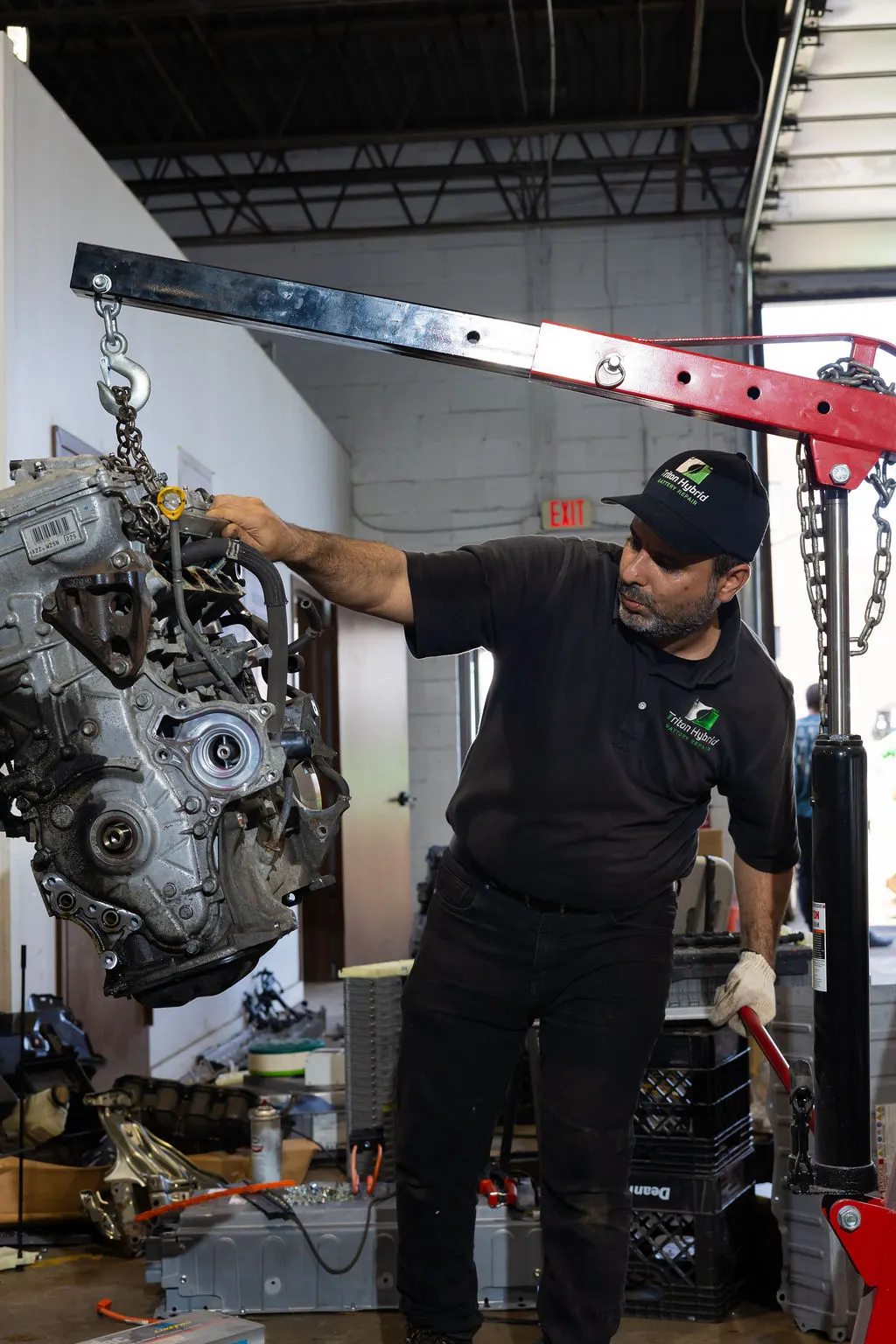
Start with evidence for the engine diagnosis
Ask what test results support the recommendation. Depending on the symptoms, the investigation may include scan data, ignition and fuel checks, cooling-system checks, compression or leak-down testing, or inspection of internal parts.
The useful question is whether the problem is in a serviceable component or inside the engine. A trouble code by itself is not a complete assessment of mechanical condition. If further inspection or teardown is needed, discuss that step before authorizing it.
What used, rebuilt, and remanufactured mean
A used engine comes from another vehicle. Its history, condition, compatibility, and supplier coverage need to be checked. A rebuilt engine is inspected and repaired, retaining parts that meet the rebuilder’s limits. A remanufactured engine generally goes through a more standardized inspection and restoration process against specified tolerances.
Those labels do not tell you everything about a particular unit. Ask for the supplier, documented scope, testing, and warranty. JASPER describes these distinctions for its products; that reference does not imply Triton is a JASPER installer or that a particular brand is available for your car.
Technical reference: JASPER: used, rebuilt, and remanufactured components.
Compare the whole repair, not just the engine
An engine quote should explain the proposed unit or rebuild work, installation, associated parts and fluids, and what happens if further damage is found. If overheating or another fault contributed to the failure, ask how the underlying cause will be addressed.
There is no useful single price for all engines. Vehicle layout, damage, machine work, parts availability, and installation requirements can change the scope substantially. At Triton, diagnosis is included with the repair and the work is quoted for your vehicle.
Consider the condition of the rest of the car
Review other known repair needs and how long you plan to keep the vehicle. A sound repair plan should fit the whole car, your priorities, and the written warranty. Ask about both parts and labor coverage, exclusions, and who handles a claim.
Triton discusses engine repairs for regular gas vehicles and the gas engines in hybrids at our Lorton shop. We do not service diesel vehicles.
Illustrative scenario
One symptom, different repair paths
This is a fictional example to explain the diagnostic process, not a customer case study or a prediction for your car.
Illustrative vehicle: a 2015 Toyota Camry
The car runs roughly and shows a check-engine warning. The owner worries that it needs an engine.
A technician would confirm the affected cylinder and investigate ignition, fuel delivery, and mechanical condition as the evidence requires.
A component repair
If testing confirms an ignition-coil fault and mechanical checks are satisfactory, the proposal could be limited to that fault and any related work.
Further engine inspection
If testing instead finds poor cylinder sealing, the next step could involve internal inspection before comparing a repair, rebuild, or replacement.
Questions to bring to the shop
- What failed, and what test confirms it?
- What is included in this rebuild or replacement?
- How will the original cause of damage be addressed?
- What written warranty covers parts and labor?
- What further findings could change the scope or timing?