
Engine repair · A Triton guide
Published
Does an overheated engine need to be replaced?
Not necessarily. An overheating warning calls for prompt attention, but it does not tell you which part failed or whether the engine has lasting damage. The repair decision depends on two findings: what caused the temperature problem, and what condition the engine is in afterward.
If the engine is overheating now, stop safely
If the temperature warning appears, the gauge reaches the hot zone, or steam escapes, get out of traffic and stop somewhere safe. Follow the emergency instructions in your vehicle’s owner’s manual. Ford’s coolant-warning guidance advises stopping safely and switching the engine off. Do not keep driving toward the shop just to see whether the warning clears; arrange roadside assistance when continued driving is unsafe.
Never remove a radiator or coolant-reservoir pressure cap while the system is hot. Pressurized steam and coolant can cause burns. Let the vehicle cool and follow its specific instructions before any inspection. A warning disappearing after cooldown is not proof that the underlying problem has been repaired.
- Technical reference: Ford: coolant temperature warning.
- Technical reference: Ford owner manual: cooling-system safety.
The details that help explain what happened
Before calling, make a short record of the event. On a trip through Lorton or elsewhere in Northern Virginia, did the temperature rise while waiting in traffic, at highway speed, or shortly after an earlier repair? Did you stop immediately? Was coolant visibly leaking? Mention any new noise, rough running, loss of power, or change in cabin heat without trying to reproduce the problem.
Share the year, make, model, engine, approximate mileage, and recent maintenance. A photo of the warning taken once safely parked can help communicate the exact message. These observations give the technician a starting point; they do not identify a failed component by themselves. Tell the shop about any coolant or additive already used, including the product if known.
A cooling-system fault may be the repair you need
The cooling system moves heat away from the engine and helps maintain its operating temperature. Gates recommends examining the system as a whole. A leak, circulation problem, or temperature-control fault can call for work on cooling components without automatically requiring a replacement engine. The technician still needs to check whether the overheating caused other damage.
For example, a thermostat stuck closed can prevent coolant from reaching the radiator. A failing water pump can leak or fail to circulate coolant properly. Those are different faults with different repair requirements. Replacing a part because it is a common culprit is not the same as confirming that it caused this vehicle’s problem.
Ask what evidence supports the proposed cooling repair and how operation will be checked afterward. If a pump is involved, the inspection may also need to consider its drive components and the reason it failed. Gates describes the relationship between belt-driven pumps, belts, and tensioners; the exact checks depend on the engine design.
- Technical reference: Gates: cooling-system diagnosis.
- Technical reference: Gates: thermostat faults.
- Technical reference: Gates: water-pump inspection.
What testing can tell you about engine damage
The useful question is not simply whether the car starts again. Ask whether the findings suggest the engine can run reliably after the confirmed fault is repaired. The testing plan should follow the symptoms and manufacturer’s procedures, rather than treating every overheated car as the same job.
Compression testing measures the pressure developed in the cylinders and can help investigate poor sealing involving rings, valves, or a head gasket. Bosch’s instructions call for comparing readings with the vehicle manufacturer’s specifications. A compression result is evidence to interpret alongside other findings, not an automatic instruction to replace the engine.
Ask to have the results explained: which area is abnormal, what possibilities remain, and what the next inspection would resolve. If diagnosis requires disassembly, agree on that stage before proceeding. It is reasonable for a shop to distinguish between a suspected problem and damage it can only confirm after opening the engine.
- Technical reference: Bosch: what compression testing investigates.
- Technical reference: Bosch: interpreting compression results against specifications.
Does a head-gasket problem mean a whole engine?
Not automatically. A head-gasket repair and an engine replacement are different scopes of work. The gasket seals combustion pressure and separates oil and coolant passages between the cylinder head and engine block. A sound recommendation must consider the condition of those parts, not just whether a new gasket is available.
Fel-Pro specifies checking the head and block surfaces and correcting surfaces that are outside specification before gasket installation. Flatness and surface finish matter. That is why a head-gasket proposal may require inspection and machine-shop work before the final scope is known.
Ask whether the recommendation assumes the head and block are usable, what inspections will confirm that assumption, and how the plan changes if they are not. Neither “just a gasket” nor “needs an engine” is enough detail to approve a major repair. You need to understand what is confirmed and what remains uncertain.
Technical reference: Fel-Pro: cylinder-head and block surface inspection.
When to compare repair, rebuild, and replacement
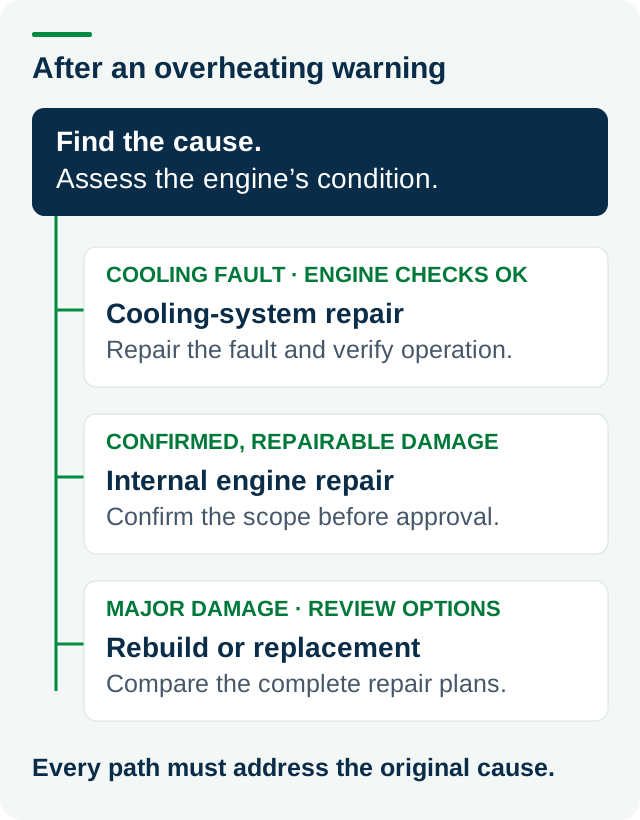
If the findings support a cooling-system repair and the engine checks are satisfactory, ask for that defined scope. If internal damage is confirmed, ask whether a targeted internal repair is feasible before comparing a rebuild or replacement. There is no universal temperature, warning duration, or mileage that lets an online article make that choice for every engine.
For major work, compare complete proposals: the engine or internal work, related components, installation, fluids, follow-up checks, and written warranty. Include the original overheating cause in the plan. Also discuss the rest of the vehicle, other known repair needs, and how long you intend to keep it. Those are personal decision factors that a parts list cannot settle.
Compare a rebuild with used and remanufactured replacement engines
What changes if your vehicle is a hybrid?
A hybrid still has a combustion engine, but the warning must be tied to the correct system. Some hybrids have separate cooling circuits for the engine and power electronics. Toyota’s published specifications, for example, list engine coolant and power-control-unit coolant separately for the vehicle covered by that manual. Do not assume every reservoir or temperature warning concerns the same component.
Provide the exact warning and model so the shop can follow the appropriate procedure. An engine-temperature concern alone does not establish that the hybrid battery needs replacement. This guide concerns combustion engines in gas vehicles and hybrids; a Tesla electric vehicle does not have that kind of engine.
Technical reference: Toyota: separate engine and power-control-unit coolant specifications.
Getting an overheating repair plan in Lorton
Contact Triton with your vehicle details, symptoms, and any previous diagnosis or repair quote. Explain if the car is currently overheating or cannot be driven safely, so you can discuss next steps before bringing it in. A quote request starts a conversation; it does not book an appointment or establish a final repair scope.
We explain the findings and get your approval before repairs. Diagnosis is included with the repair. We do not publish prices or ranges because the vehicle, root cause, parts, labor, and further findings can change the work substantially. Ask which written warranty applies to the engine work proposed for your car; hybrid-battery warranty terms do not describe engine coverage.
Our Lorton shop services all hybrid makes and models, Tesla electric vehicles, and regular gas vehicles. We do not service diesel vehicles. Whether you are considering a cooling repair or comparing a major engine proposal, start with the cause and the evidence for the recommendation.
Discuss engine repair, rebuilding, or replacement with Triton
Illustrative scenario
One symptom, different repair paths
This is a fictional example to explain the diagnostic process, not a customer case study or a prediction for your car.
Illustrative vehicle: a gas-powered sedan with a temperature warning
The owner notices the temperature rising during a trip and stops safely. After cooling down, the car can start, but the owner has it transported for inspection rather than assuming the fault is gone.
The technician investigates the cooling fault and checks engine condition as the findings require. The fact that the engine restarted does not choose between these possible outcomes.
A confirmed cooling fault
Testing identifies a failed thermostat and the relevant engine checks are satisfactory. The proposal addresses the confirmed fault and verification after repair, without assuming the car needs another engine.
Evidence of internal damage
The findings raise a cylinder-sealing concern. Further inspection is discussed before deciding whether internal repair is suitable or a rebuild or replacement should be considered.
Questions to bring to the shop
- What caused the overheating, and what evidence confirms it?
- What checks support your assessment of the engine’s condition?
- What can you confirm now, and what needs disassembly?
- How will you address the original cause and verify the repair?
- What is included in the proposal and its written warranty?