
Hybrid battery diagnosis · A Triton guide
Published
Why is my hybrid getting bad gas mileage?
Poor gas mileage does not, by itself, mean your hybrid needs a battery. First establish what changed: the measurement, your trips, the weather or the way the car runs. A persistent unexplained decline, especially with warning messages or other symptoms, deserves diagnosis. For Falls Church owners, bringing a useful record to the Lorton shop can help distinguish an operating-condition change from a problem that needs repair.
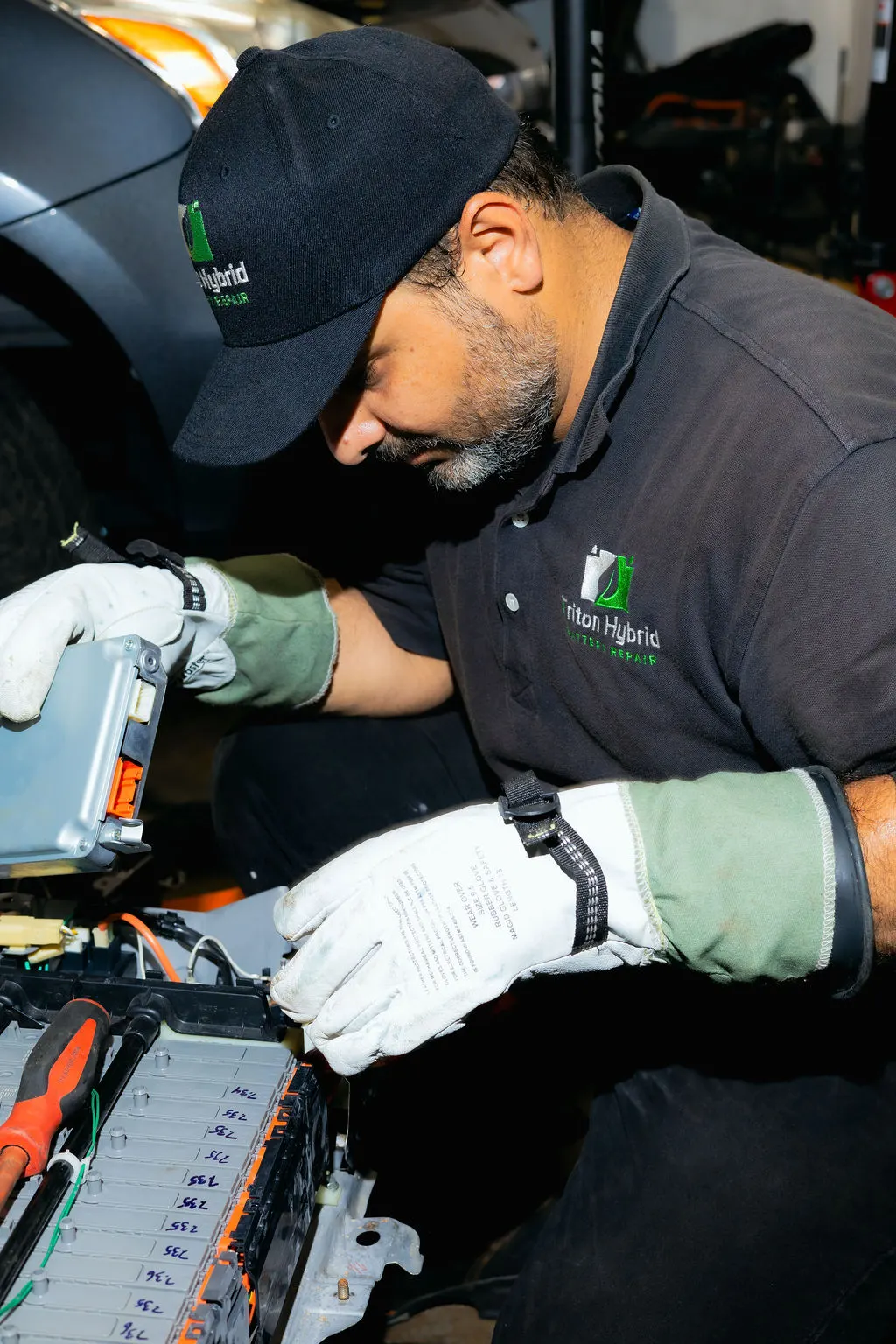
Authorized Triton workshop photograph of battery service, not a documented poor-MPG customer case.
Are you comparing the same measurement?
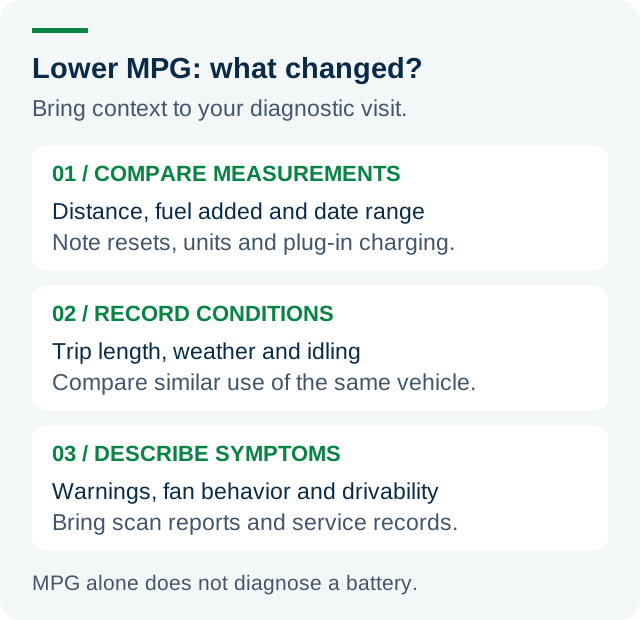
“Bad mileage” can mean a lower dashboard average, fewer miles between fill-ups or a difference from another owner’s car. Those are different comparisons. Write down which one concerns you and what the earlier figure represented. A trip average after a reset should not be compared directly with a long-term average built up over months.
For a fuel-use record, save the distance traveled and gallons added between consistent fill-ups. Miles divided by gallons gives miles per gallon; combining several comparable intervals is more useful than focusing on one fill. Stop fueling as directed by the vehicle and pump instructions, without topping off to force an exact amount. A fuel receipt alone does not show how far the car traveled.
Include units and the exact model, year and powertrain. Lower MPG means more fuel used per mile; a lower liters-per-100-kilometers figure means less fuel used. If yours is a plug-in hybrid, also record whether charging access or charging frequency changed. Otherwise, the comparison leaves out part of how you used the vehicle.
Could colder weather or different trips explain it?
The DOE/EPA fuel-economy guidance identifies cold starts, short trips, extra idling, lower tire pressures in cold weather and winter fuel as reasons fuel economy can change. Hybrids are affected too. Its test results describe particular conditions and groups of vehicles; they are not a percentage allowance that proves your car is healthy.
Compare the conditions before and after the decline. Did a longer commute become several short errands? Did you begin warming the car while parked? Was the older average from warmer weather? Record these differences instead of trying to recreate a summer result on a cold morning.
Keep necessary visibility and comfort controls in use. Do not drive with a fogged windshield to improve a number. The useful question for diagnosis is whether the change fits the circumstances, not whether you can obtain an unusually high reading on one carefully chosen trip.
Technical reference: DOE/EPA: fuel economy in cold weather.
What should be checked before blaming the battery?
Check the maintenance record and report recent tire changes, service or warning lights. DOE/EPA guidance recommends the specified tire pressure and motor-oil grade, and prompt attention to an engine warning. Use the vehicle’s tire-pressure label and manual, not the maximum pressure on the tire sidewall. If you are unsure how to check it correctly, ask the shop.
A tune-up or filter replacement is not automatically the answer either. The same guidance explains that replacing a clogged engine air filter on a modern fuel-injected gasoline vehicle may improve acceleration without improving fuel economy. That engine filter is a different component from a hybrid battery cooling filter.
Ask for a finding that relates to your complaint before approving parts. A maintenance item can be due without explaining the whole MPG decline. Conversely, an overdue item should not be ignored just because you initially suspected the battery. Keep the service history available so the assessment can address both questions.
Technical reference: DOE/EPA: vehicle maintenance and fuel economy.
Can a battery cooling problem affect fuel economy?
Yes, on systems where the manufacturer identifies that connection. Toyota’s Prius c owner’s manual OM52G95U, pages 408–409, warns that a clogged traction-battery air intake or filter can allow overheating and increased fuel consumption. It also describes a cooling-parts maintenance message and calls for inspection if the message remains after the specified cleaning.
This is a Prius c example, not a universal filter location, maintenance interval or diagnosis for every hybrid. Give the shop the exact warning text and vehicle details. Do not remove battery covers, touch high-voltage connections or apply a cleaning procedure from another model.
A cooling concern is worth investigating before assuming the battery assembly itself needs replacement. However, finding dirt does not establish that cleaning will resolve every symptom or that no damage exists. The shop should explain what was found and what follow-up is needed.
Technical reference: Toyota Prius c manual OM52G95U, pages 408–409: battery cooling and fuel use.
When is hybrid battery testing useful?
Arrange an assessment when the decline remains unexplained after you account for the comparison and conditions, or when it comes with new warnings, unusual battery-fan behavior or a change in drivability. You do not need to collect several tanks of data before reporting a warning. Follow the displayed instructions and your manual; stop safely and arrange assistance if directed to stop or if substantial loss of power makes driving unsafe.
Bring any existing scan report rather than only a verbal statement that the battery is bad. Ask which findings support that conclusion, which vehicle-specific checks were performed and whether other causes remain unresolved. If a report contains P0A80, use the code-specific guide to prepare for that discussion.
Testing should answer a defined question about this vehicle. Ask whether the evidence identifies a battery fault, a cooling issue, another system concern or an issue that still needs investigation. An MPG figure alone cannot make that distinction. Nor should a charge-display photograph be treated as a battery-health certificate.
Understand a P0A80 scan result
Understand changes in the battery charge display
Will a new battery restore my old MPG?
No particular MPG result should be promised from the symptom alone. A proposed repair should address an established fault. Ask what the work is expected to correct, what it will leave unchanged and how the shop will verify the result. If driving conditions also changed, the earlier average may not be a suitable after-repair target.
If battery work is justified, compare the actual repair and replacement proposals: parts replaced or retained, the reason for that scope, and written coverage. Cost depends on the vehicle, root cause, parts and labor. Triton includes diagnosis with the repair; agree on charges for standalone testing beforehand.
Battery repair coverage is one year; battery replacement coverage is three years / 50,000 miles, subject to written terms. Those terms do not extend to unrelated engine or A/C work. Keep the estimate and findings so a later conversation can refer to the confirmed problem rather than just the original dashboard number.
How can Falls Church drivers prepare for a visit?
Call (571) 325-1369 or request a quote with the year, model, mileage, previous and current fuel-use records, warning text and recent service history. Tell the shop whether the vehicle is driving normally and discuss suitable transport if it is not. All repairs and inspections take place at 8419 Terminal Rd, Lorton, VA 22079; there are no mobile repairs or inspections.
Available visits at least 24 hours away confirm automatically. Visits less than 24 hours away require Sal’s approval, so wait for confirmation. An arrival slot does not promise diagnosis or repair completion while you wait. Arrange return transportation and discuss timing when booking.
Questions to bring to the shop
- What changed in the measurement or driving conditions?
- Which findings explain the fuel-economy decline?
- What will the proposed repair correct, and how will that be verified?