Engine diagnosis · A Triton guide
Published
What causes low compression in one cylinder?
Low compression in one cylinder can point to a problem with cylinder sealing, including a valve, piston rings or cylinder-wall damage, or a head-gasket or casting problem. It does not identify the failed part by itself, and it does not automatically mean you need another engine. First establish how the measurement was taken, then what additional findings explain it. For Alexandria drivers comparing engine repair proposals, those details can change the scope of the work you approve.
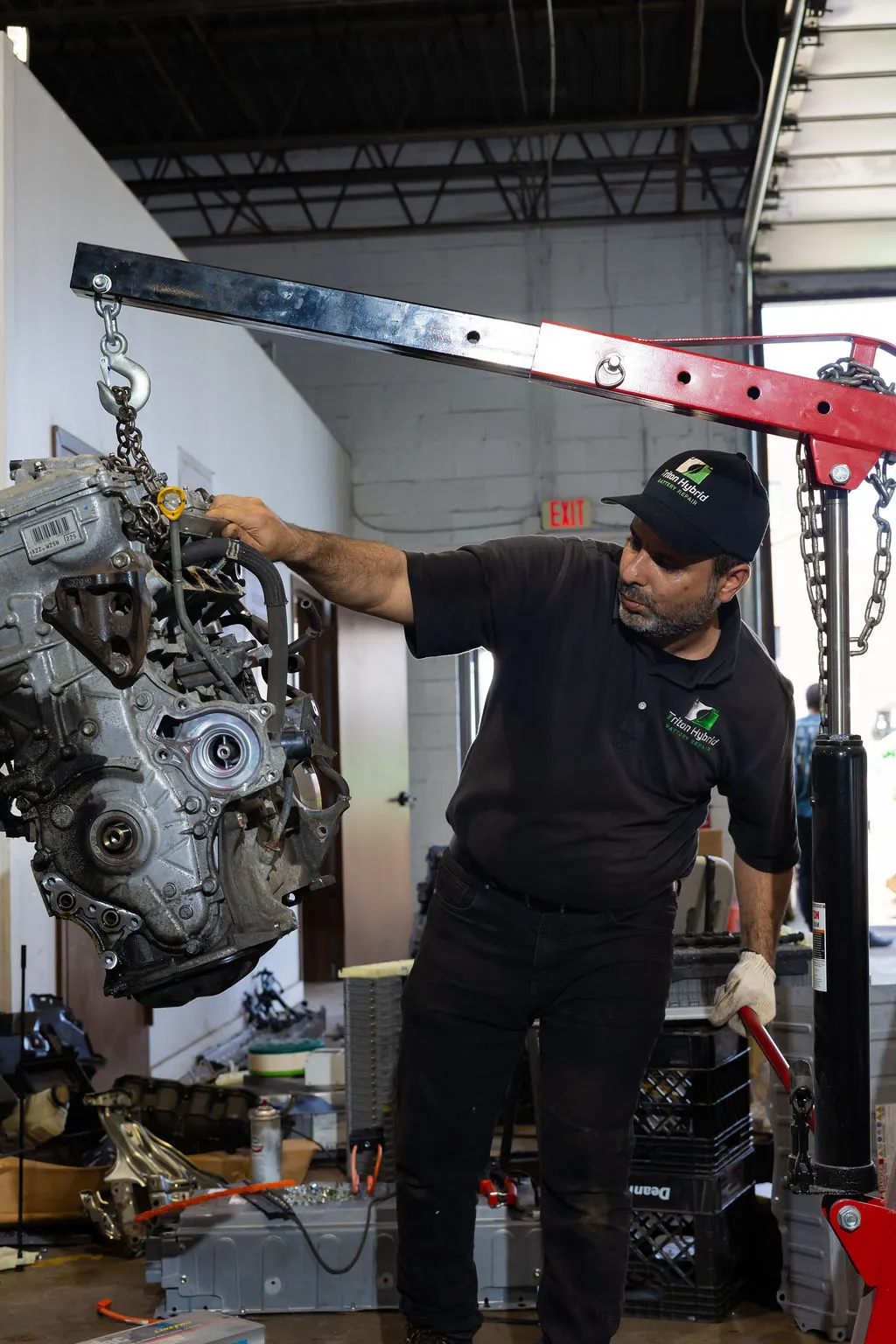
Existing Triton workshop photograph. It does not depict a customer case involving low compression.
What does the compression result actually tell you?
A compression test measures pressure developed as the engine turns through compression strokes. The number belongs to a particular cylinder, engine and test setup. “Cylinder three is low” is an observation; “the exhaust valve is damaged” is a diagnosis that needs supporting evidence. Ask the shop to distinguish those statements in the report.
Bosch’s compression-tester instructions call for comparing results with the vehicle manufacturer’s specifications. Bring the complete set of readings, the units and the conditions recorded by the technician. A single number copied into a message leaves out the comparison that made it concerning. A universal internet pressure threshold is not a substitute for the specification for your engine.
Also ask what kind of test produced the result. A relative comparison, a pressure measurement and a cylinder-leakage test do not report the same thing. If the report simply says “compression failed,” request the underlying results before comparing it with another shop’s assessment. Keep earlier reports even if a later test appears different.
Technical reference: Bosch: compression-tester instructions and result interpretation.
Which parts can cause one cylinder to read low?
The cylinder needs to contain pressure. Valves must seal against their seats, and the piston, rings and cylinder wall form another sealing boundary. The cylinder head, gasket and block also matter. A loss through one of these areas can produce a low result, but the repair needed depends on the location and extent of the problem.
OTC’s cylinder-leakage tester instructions connect different air-escape locations with different possible faults. Leakage heard at the exhaust points toward the exhaust-valve sealing path; intake leakage points toward the intake side. Leakage into the crankcase can implicate rings or cylinder walls. Leakage into the cooling system can involve a gasket or a crack in the head or block.
Those are directions for investigation, not permission to order a part from a sound alone. The test must be set up correctly and interpreted for the engine. OTC also notes that a cylinder should not be expected to have absolutely no leakage. This article does not supply a universal acceptable percentage or a procedure for pressurizing an engine.
Technical reference: OTC 5609: cylinder-leakage interpretation and possible leakage paths.
Why might the shop recommend a leak-down test?
A compression test and a leak-down test answer related but different questions. Mobil describes leak-down testing as introducing compressed air into a cylinder and assessing escaping air. That can help locate a sealing problem rather than merely confirm that the cylinder produced less pressure during a compression test.
Ask what the proposed follow-up would resolve. For example, does the technician need to distinguish a valve-sealing concern from leakage past the piston? Would the result change the repair recommendation? These are useful questions before authorizing more diagnostic work. A second test should have a purpose connected to the first finding.
Test results may still leave uncertainty. Inspection of the affected parts may be necessary before a shop can describe the full repair. Agree on that next stage, its charge and what authorization will be needed afterward. Do not interpret an initial diagnostic visit as permission for unlimited disassembly or a promise that every hidden problem will be identified immediately.
Technical reference: Mobil: what leak-down testing measures.
What should I bring when seeking a second opinion?
Send the year, make, model, engine information if known, mileage and the complete report. Include the reason testing began: rough running, a warning light, an overheating event, oil use, coolant loss or another complaint. Separate what you noticed from what someone suggested might be wrong. That helps the next technician understand the question being investigated.
Bring invoices for recent engine work, scan reports and any available compression or leakage measurements. If the engine has been replaced, mention that rather than assuming the original vehicle specification identifies every installed component. Tell the shop whether codes were cleared or parts were changed between tests. Missing records are an uncertainty to discuss, not proof that the earlier work was wrong.
You do not need to reproduce a severe symptom on the road to support your account. A safe observation you already have is enough to start the conversation. Leave engine pressurization, spark-plug removal and hybrid-system precautions to the technician; this guide is for interpreting a repair discussion, not performing the tests.
Does one low cylinder mean I need an engine replacement?
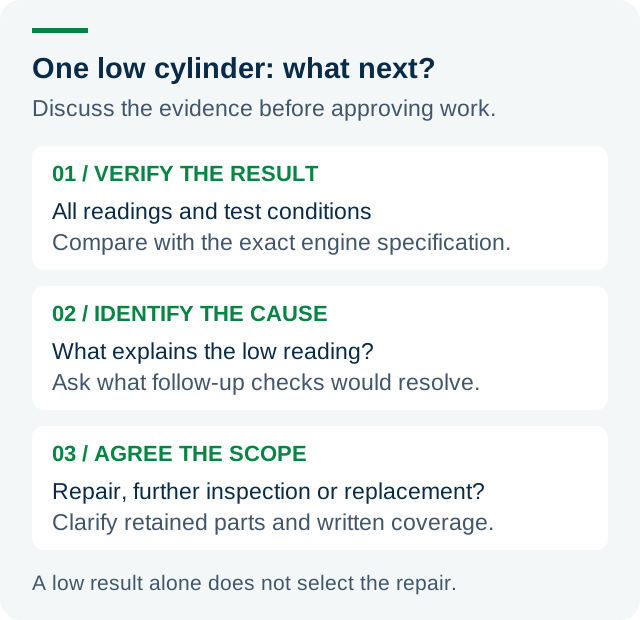
No. The result alone does not establish whether the appropriate work is localized repair, more extensive internal work or replacement. Ask which findings support the proposed scope. A recommendation should explain the affected parts and why work beyond them is needed, rather than use the phrase “low compression” as the entire justification.
If cylinder-head work is proposed, ask what will be inspected and what could change the plan after removal. If a rebuild or replacement is proposed, ask what is known about the rest of the engine and which components would be retained. Compare written scopes, not just the names of the options. Two proposals described as “engine repair” can include substantially different work.
Consider the vehicle as a whole, including other known repairs, your plans for keeping it and the uncertainty remaining after inspection. Costs depend on the vehicle, root cause, parts and labor. Triton does not publish a price or range for this finding because the same initial report can lead to different work. Diagnosis is included with the repair; agree on any standalone diagnostic charge in advance.
Ask for the verification plan and written coverage for the engine work itself. Triton’s battery warranty terms do not describe engine coverage. The FTC recommends understanding repair estimates, diagnostic charges and warranty terms before authorizing work. Keep the approved scope and the final invoice together so you can see what was actually performed.
Technical reference: FTC: repair estimates, diagnostic charges and warranties.
Can I drive from Alexandria for the assessment?
A compression number alone cannot establish that the car is safe to drive. Describe its current behavior when contacting the shop and follow the vehicle’s warning instructions. If it tells you to stop, stop safely. Do not drive a vehicle with severe loss of power, overheating or other serious symptoms simply to reach an appointment; discuss suitable transport.
All repairs and inspections take place at 8419 Terminal Rd, Lorton, VA 22079. There are no mobile repairs or inspections. Alexandria drivers should send reports ahead, confirm drop-off arrangements and plan return transportation. An arrival slot does not promise completion of testing or repair while you wait.
Available visits at least 24 hours away confirm automatically; visits less than 24 hours away require Sal’s approval, so wait for confirmation. Call (571) 325-1369 or request a quote with the vehicle details and findings. Triton services regular gas vehicles and all hybrid makes and models, as well as Tesla EVs, but no diesel vehicles. This compression discussion concerns combustion engines, not an electric vehicle’s traction motor.
Questions to bring to the shop
- Which cylinder tested low, and what were the other readings?
- Which vehicle-specific specification and test procedure were used?
- What evidence identifies the leakage path or damaged part?
- What remains uncertain until further inspection?
- What repair scope, verification and written coverage are included?