Engine diagnosis · A Triton guide
Published
Why is my engine knocking when I accelerate?
A knock when you accelerate can come from abnormal combustion, worn internal engine parts or another component making noise as the car works harder. The sound alone does not establish which repair you need. A new heavy knock, especially with warning lights or a loss of power, needs prompt attention. This guide helps Alexandria-area drivers describe the problem and understand the findings before approving engine work at Triton’s Lorton shop.
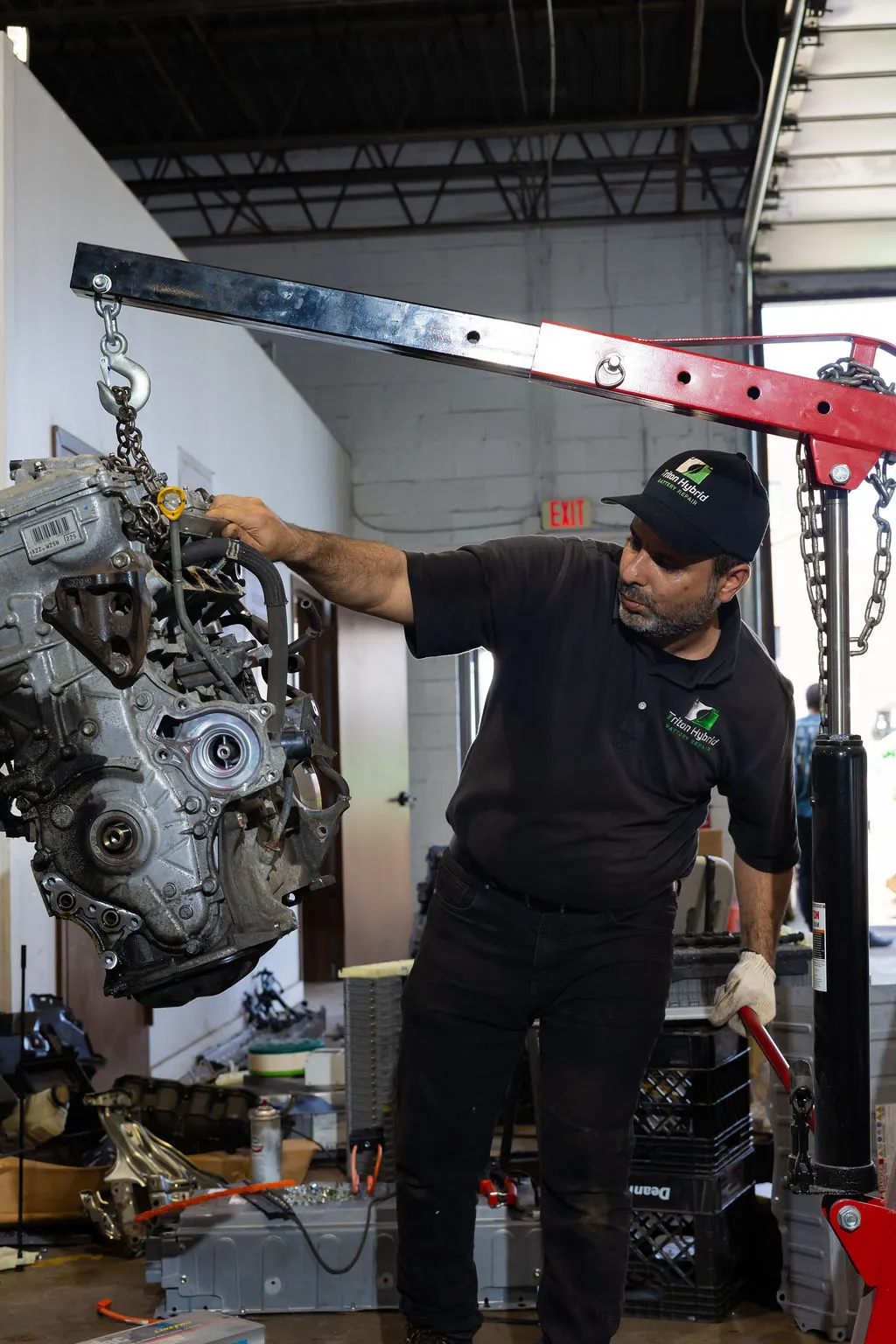
An existing Triton shop photograph illustrating engine service. It does not document a knocking-engine repair or mean that your engine needs replacement.
Can I keep driving with an engine knock?
Do not keep accelerating to see whether a new heavy knock goes away. If it comes with an oil-pressure warning, overheating, severe shaking or a sudden loss of power, pull over safely, switch the vehicle off and arrange professional advice and suitable transport. Do not restart it just to record the sound. A quieter noise still deserves assessment; a description online cannot establish that a trip is safe.
Warning meanings and instructions depend on the vehicle. For example, the 2025 Ford Escape manual identifies the oil-pressure lamp as a low-pressure warning and directs drivers to stop safely and switch off for the engine or motor coolant-temperature warning. Use your own manual’s instructions rather than assuming every dashboard symbol has the same meaning.
When contacting the shop, say whether the vehicle is parked safely and whether any warning appeared while the engine was running. That information matters before choosing an arrival time or deciding how to get the car from Alexandria to Lorton.
Technical reference: Ford: 2025 Escape instrument-cluster warning lamps.
Is it a ping, a heavy knock or a rattle?
Everyday descriptions are useful, but they are not diagnoses. A light metallic ping and a heavy rhythmic pounding can sound similar on a phone recording. Note when the sound occurs, where you notice it and what changes with it; leave the choice of failed part open.
The FTC’s repair guide distinguishes pinging, heavy knocking and clunking. Its examples include fuel-related pinging, crankshaft or connecting-rod bearing wear, and loose exhaust or suspension components. Those examples show why “it knocks” can lead to different investigations. They are not a way to select parts from a sound alone.
Avoid trying to recreate the noise with hard acceleration, repeated revving or a road test while filming. Describe conditions you already observed. If you have a recording taken safely before the problem worsened, offer it as a clue alongside the vehicle details and history.
Technical reference: FTC: sounds that can signal vehicle trouble.
Could fuel or combustion be causing the noise?
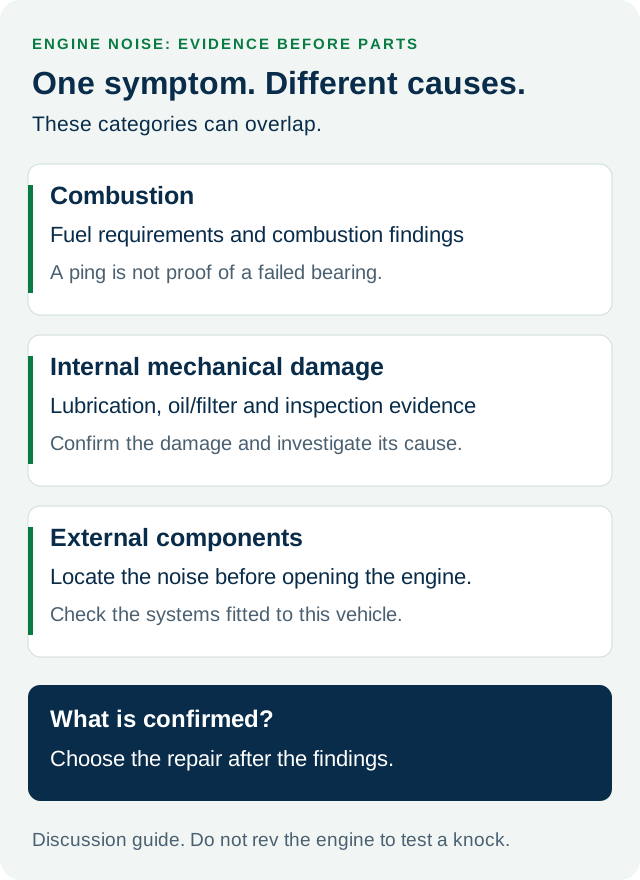
Combustion knock is different from a loose or damaged bearing. DENSO explains that detonation produces rapid pressure waves after combustion begins, which can create a pinging or knocking sound. Pre-ignition begins before the correctly timed spark; the terms should not be treated as interchangeable. Prolonged detonation can damage engine components.
Fuel requirements are vehicle-specific. The 2025 Escape/Kuga manual’s fuel section specifies its applicable octane requirements and tells owners to seek service if heavy knocking continues with the recommended fuel. That is a bounded Ford example, not a fuel recommendation for every Toyota, Lexus or other vehicle. Check the manual for your year, engine and market.
Tell the technician if the sound began after refueling or after ignition work, and bring the receipt or invoice if available. That timing is a useful lead, not proof of contaminated fuel or an installation error. DENSO also cautions that symptoms resembling spark-plug faults can come from other systems. Correct plug specification and condition are part of the assessment, not a reason to replace plugs without findings.
- Technical reference: DENSO: combustion faults and spark-plug diagnosis.
- Technical reference: Ford: 2025 Escape/Kuga fuel selection.
What would point to internal engine damage?
If the technician suspects a bearing or other internal fault, ask what supports that conclusion beyond the noise. Depending on the vehicle and findings, the next assessment may involve the lubrication system, oil and filter condition, or an agreed inspection of internal parts. Ask which evidence is already available and what requires further access.
Motorservice’s engine-bearing damage guide explains why the cause must be investigated as well as the damaged part. Oil supply, contamination, surrounding components and bearing conditions can all matter. It recommends documenting operating conditions and retaining oil or filter evidence during a damage investigation. Replacing a damaged bearing alone may leave the underlying cause unresolved.
The repair decision should distinguish a suspected fault from confirmed damage. If disassembly is proposed, agree on what will be inspected, the authorization limit and when the shop will contact you again. Photos and measurements should be explained in relation to the manufacturer’s specifications, not presented as a universal pass-or-fail number for every engine.
Technical reference: Motorservice: Damage to Engine Bearings, cause assessment and documentation.
Compare rebuilding and replacement after internal damage is confirmed
Can another component sound like an engine problem?
Yes. The investigation should establish where the sound originates before assuming the engine needs opening. On vehicles with an automatic accessory-belt tensioner, Gates identifies pulley-bearing noise and abnormal tensioner chattering or bouncing as signs to investigate. This applies to that belt-drive arrangement; not every hybrid or electric vehicle has it.
An identified external fault can call for a focused component repair rather than internal engine work. Ask how the source was isolated and how the proposed repair will be checked afterward. Leave running-engine inspections to a technician; do not reach near belts, pulleys or fans to locate a noise.
For a hybrid, report whether the gasoline engine was running when you noticed the sound, if you know. Do not assume that a noise during electric operation is combustion knock. Tesla EVs have no gasoline engine, so a similar acceleration noise needs a different investigation. This article concerns gas engines, including those in hybrids.
Technical reference: Gates: TT004-15, diagnosing automatic tensioner failure.
What should I tell the shop before the visit?
A concise history is more helpful than arriving with a guessed diagnosis. Include the year, make, model, mileage and engine if known. Bring prior estimates and recent maintenance invoices, even if another shop found no fault. For an intermittent noise, describe your normal journey rather than trying to reproduce the problem for this checklist.
- When it began, whether the engine was cold or warm, and whether the noise changed suddenly.
- Whether it happened only during acceleration or was also present at idle, while turning or over bumps.
- Any warning messages, shaking, power loss, overheating or visible fluid leak noticed at the same time.
- Recent refueling, oil service, ignition work, overheating history or changes to the vehicle.
- What a previous technician tested, the findings, and any parts already replaced.
Does a knocking engine always need a rebuild?
No. The repair follows the confirmed source. A component or combustion-related fault and extensive internal damage lead to different options. If rebuilding or replacement is recommended, ask why a more limited repair would not address the findings. The existing engine’s condition and the full proposed scope matter more than the word “knock.”
Request a written estimate that separates the confirmed work from further inspection or possible additions. The FTC recommends clarity about parts, labor and authorization for extra work. Ask about the specific warranty in writing. Triton does not apply its hybrid battery warranty terms to engine repairs.
There is no reliable public price or range for this symptom. Vehicle configuration, root cause, access, parts, damage and labor all affect the individual quote. Diagnosis is included with the repair at Triton; standalone testing should have its scope and charge confirmed beforehand.
Technical reference: FTC: estimates, diagnostic charges and repair warranties.
How do I arrange engine diagnosis from Alexandria?
Contact Triton with your vehicle details, the symptom history and any existing estimate. The shop is at 8419 Terminal Rd, Lorton, VA 22079. Describe warning lights or a heavy new knock before planning the trip; if the car may be unsafe to drive, arrange suitable transport and coordinate its arrival with the shop.
Plan return transportation if you are leaving the car. An arrival slot is not a promise that diagnosis or repair will be completed while you wait. Visits booked less than 24 hours ahead require Sal’s approval; wait for confirmation before coming in. All repairs and inspections take place at the shop.
Triton services regular gas vehicles, all hybrid makes and models, and Tesla EVs, but not diesel vehicles. Call (571) 325-1369 or send a quote request to discuss the right next step for your vehicle.
Questions to bring to the shop
- What findings distinguish the source of my noise from the other possibilities?
- What is confirmed now, and what additional inspection needs my approval?
- How will the repair address the cause and be checked afterward?
- What work, parts and written warranty does the individual estimate include?
Get help with your vehicle in Northern Virginia
Engine repair and rebuilding
Discuss the confirmed findings and a vehicle-specific repair scope.
Rebuild or replace an engine?
Compare options when internal damage has been established.
Engine overheated before the noise?
Understand cooling-system and engine checks after overheating.
Service for Alexandria drivers
Arrange diagnosis, drop-off and transport to the one Lorton shop.