Engine diagnosis · A Triton guide
Published
Prius cold-start shaking: head gasket or another fault?
A Prius that shakes or rattles when the engine starts needs a diagnosis, but the noise alone does not prove a blown head gasket. Toyota has documented several different conditions that can produce rough running. For Fairfax and Northern Virginia drivers, the useful next step is to connect the symptoms with test results before approving head-gasket work or an engine replacement.
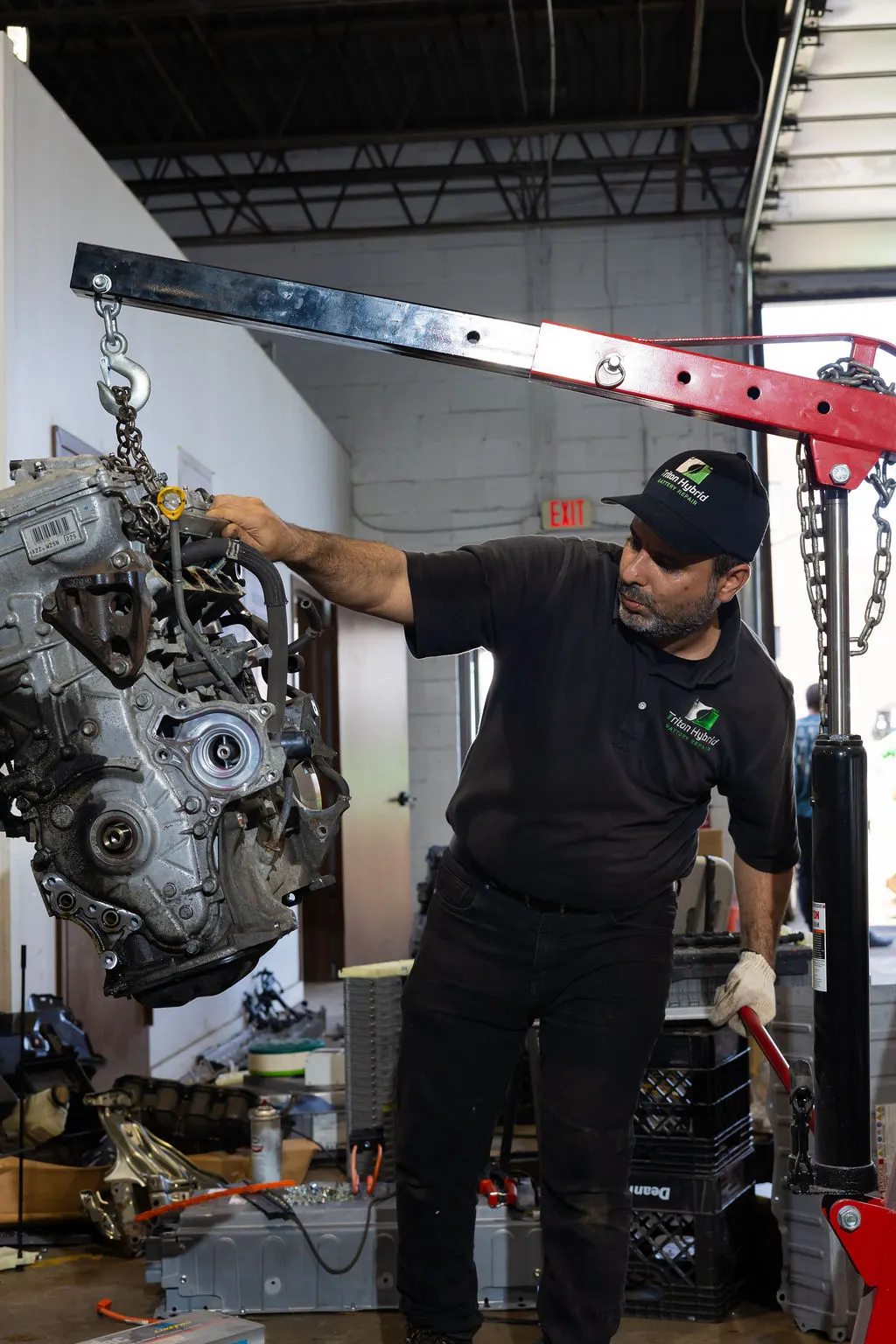
Existing Triton workshop photo, used to illustrate engine service. It does not document a Prius head-gasket repair.
Should you drive a Prius that is shaking?
If the engine is shaking severely, the check-engine light is flashing, power drops, or a temperature warning appears, stop somewhere safe and switch the vehicle off. Follow the emergency instructions for your model and arrange professional advice or transport. Do not keep restarting it to record a better video or drive across Fairfax County to test whether the shaking clears.
A brief event still deserves attention, especially if it returns. Tell the shop whether the car is currently running normally or the fault is active. Do not remove a hot coolant pressure cap or work around orange high-voltage wiring. A hybrid can require precautions beyond those of a conventional gas car; this guide is for planning diagnosis, not carrying it out.
Technical reference: Fel-Pro: head-gasket warning signs and cooling-system safety.
Record when it happens before choosing a repair
“Cold start” describes an engine starting after it has had time to cool, not just a freezing morning. Explain whether the shaking follows an overnight stop, happens after several hours parked, or occurs once the car is already warm. Also distinguish engine startup from shaking during light acceleration; those are different operating conditions.
Send the year, exact Prius model, mileage and service history. The Prius liftback, Prius v, plug-in Prius and Prius c should not be treated as interchangeable. Include any previous engine work or replacement, since the installed engine and existing software can matter when checking service information.
- How long the shaking lasts, how often it occurs, and whether it has changed.
- The exact warning message and any existing scan report, including all codes.
- Any observed coolant loss, temperature warning, recent top-up or repair.
- A recording you already have, taken safely; do not deliberately recreate a severe fault.
P0300 or P0301 does not mean “replace the head gasket”
P0300 identifies a random or multiple-cylinder misfire; P0301 through P0304 identify misfires associated with individual cylinders. They describe detected engine behavior. They do not, by themselves, identify a failed gasket, ignition component or fuel-delivery part.
Ask which cylinder is affected, under what conditions, and what evidence connects the code to the proposed repair. Give the technician the original scan report if another shop has already checked the car. Tell them if codes were cleared or parts were replaced, so the history is not mistaken for a fresh, untouched fault.
Technical reference: Toyota T-SB-0147-16: cold-soak rough running and misfire codes.
Other causes Toyota documented for particular Prius models
Toyota’s published bulletins show why matching the vehicle and symptom matters. They are evidence that more than one repair path exists, not instructions to apply the same fix to every shaking Prius. A technician should confirm the VIN, installed components, software and current Toyota service information before using a bulletin.
- T-SB-0027-16 covers certain early Prius-family vehicles, including 2010–2012 Prius liftbacks subject to its production limits. It describes a sticking EGR valve, rough cold-start running and possible P0401. EGR means exhaust gas recirculation.
- T-SB-0147-16 covers certain 2013–2015 Prius and Prius PHV vehicles and 2013–2016 Prius v vehicles. It describes an engine-control software change for a specified cold-soak vibration or misfire condition.
- T-SB-0116-15 Rev1 describes another pattern: misfires during light acceleration while EGR is active on specified Prius-family models. That driving complaint should not be treated as identical to a noise only at startup.
- Technical reference: Toyota T-SB-0027-16: EGR-related cold-soak condition.
- Technical reference: Toyota T-SB-0147-16: model-specific engine-control update.
- Technical reference: Toyota T-SB-0116-15 Rev1: misfire during light acceleration.
Which findings raise concern about a head gasket?
The head gasket helps contain cylinder pressure and separate oil and coolant between the engine block and cylinder head. Unexplained coolant loss, overheating, persistent white exhaust or contaminated oil can raise concern about a sealing problem. Report these observations together with the misfire history; a symptom list is not a verdict.
Ask where the coolant is going and what confirms that conclusion. An external cooling-system leak calls for a different repair than coolant entering a cylinder. Similar symptoms can also accompany a cracked cylinder head. Fel-Pro explains that distinguishing a damaged gasket from a cracked head can require disassembly and specialist inspection. Agree on that investigative stage before approving it.
- Technical reference: Fel-Pro: gasket function and symptoms.
- Technical reference: Fel-Pro: why gasket and cylinder-head symptoms overlap.
What a useful diagnosis should explain
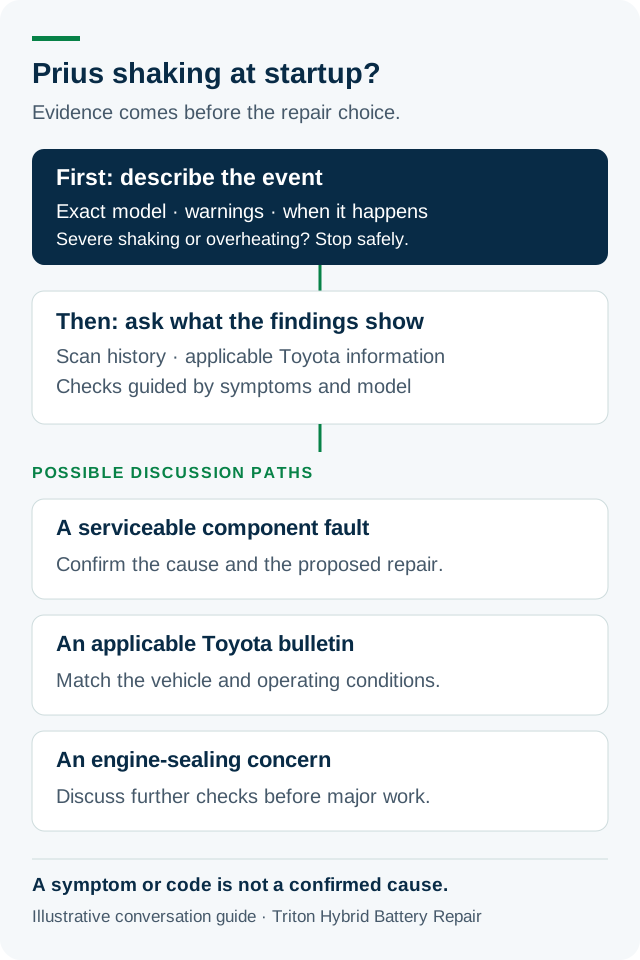
The testing plan should follow the complaint. Ask whether the shop has reproduced the startup event, reviewed scan information and checked applicable ignition, fuel, intake or EGR causes. If coolant loss or engine-sealing concerns remain, ask which additional checks would resolve them. Not every vehicle needs every test, and an initial scan is not the same as a full mechanical assessment.
Compression testing can help investigate cylinder sealing. Bosch’s tester instructions emphasize comparison with the vehicle manufacturer’s specifications. Ask for the findings in plain language: what is abnormal, what possibilities remain, and whether further inspection is needed before a repair decision. Avoid approving an engine solely from an unexplained number or a trouble-code printout.
Technical reference: Bosch: compression-test interpretation and manufacturer specifications.
Head-gasket repair, targeted repair or another engine?
If testing confirms a serviceable component fault, the proposal should address that finding and verification afterward. If a head-gasket problem is supported, ask about the condition of the cylinder head and block before assuming either a simple gasket swap or a complete engine is appropriate.
Fel-Pro specifies inspecting mating surfaces and their finish before installing a gasket. A head-gasket proposal may therefore depend on inspection or machine-shop findings. Ask what is included now, which findings could change the scope, and whether the original cause of overheating or other damage has been addressed.
If the engine has wider internal damage, compare the complete repair, rebuild and replacement proposals. Include the rest of the car’s condition and your intended use. The existing rebuild-versus-replacement guide explains those choices in more detail; this startup symptom alone cannot choose one.
Technical reference: Fel-Pro: head and block surface inspection.
Common questions about Prius startup shaking
Could this be the hybrid battery? A startup shake or combustion misfire code does not establish a traction-battery failure. Share all warning messages so the shop can identify the affected systems. Do not approve a battery replacement solely because the vehicle is a hybrid.
Does it matter if the shaking stops after a few seconds? Yes: the duration and conditions help define the complaint, but the engine smoothing out does not prove the cause is gone. Arrange diagnosis for a recurring event.
Does a Toyota bulletin mean my repair is covered? A bulletin describes a condition and a repair procedure for an applicable vehicle. Its existence does not establish current warranty eligibility for your car. Ask about your VIN, history and the actual written coverage before relying on it.
Can I get a final head-gasket quote from a code? A code alone cannot establish the required work. The vehicle, root cause, component condition, parts and labor all affect the proposal. Ask what has been confirmed and what still needs inspection.
Arrange Prius engine diagnosis from Fairfax
Triton serves Fairfax-area drivers at one shop: 8419 Terminal Rd in Lorton. Before arranging the trip, send your vehicle details, startup symptoms and any prior scan report or repair estimate. If the car shakes severely or has an active warning, discuss safe transport instead of assuming it can make the drive.
For an intermittent overnight symptom, ask whether the shop needs the vehicle left long enough to check it after cooling. Confirm drop-off arrangements and plan your return transportation. This helps preserve the conditions you are describing without promising that every intermittent fault will appear on demand.
Diagnosis is included with the repair. If you are requesting diagnosis without authorizing repair, clarify that scope and any charge first. We explain the findings and get approval before repairs. Ask for the written warranty for the engine work being proposed; battery-repair warranties do not describe engine coverage. Call (571) 325-1369 or request a quote to discuss the next step.
Technical reference: FTC: diagnostic charges, estimates and written repair warranties.
Plan a repair visit from Fairfax
Questions to bring to the shop
- What findings explain the startup shaking on my particular Prius?
- Which Toyota bulletin, if any, applies to the VIN and current symptoms?
- Is coolant loss confirmed, and where is it occurring?
- What do you know now, and what needs further inspection?
- What work, verification and written coverage are included?