Fleet engine diagnosis · A Triton guide
Published
What should I do if my company car’s check engine light comes on?
Follow the vehicle’s warning instructions first, then notify the person responsible for your company’s vehicles. Report what happened and arrange the appropriate assessment; do not treat a warning light as permission to replace parts or as proof that the engine needs rebuilding. For Arlington businesses, a clear handoff between driver, approval contact and repair shop helps everyone understand the next decision before the vehicle reaches our Lorton shop.
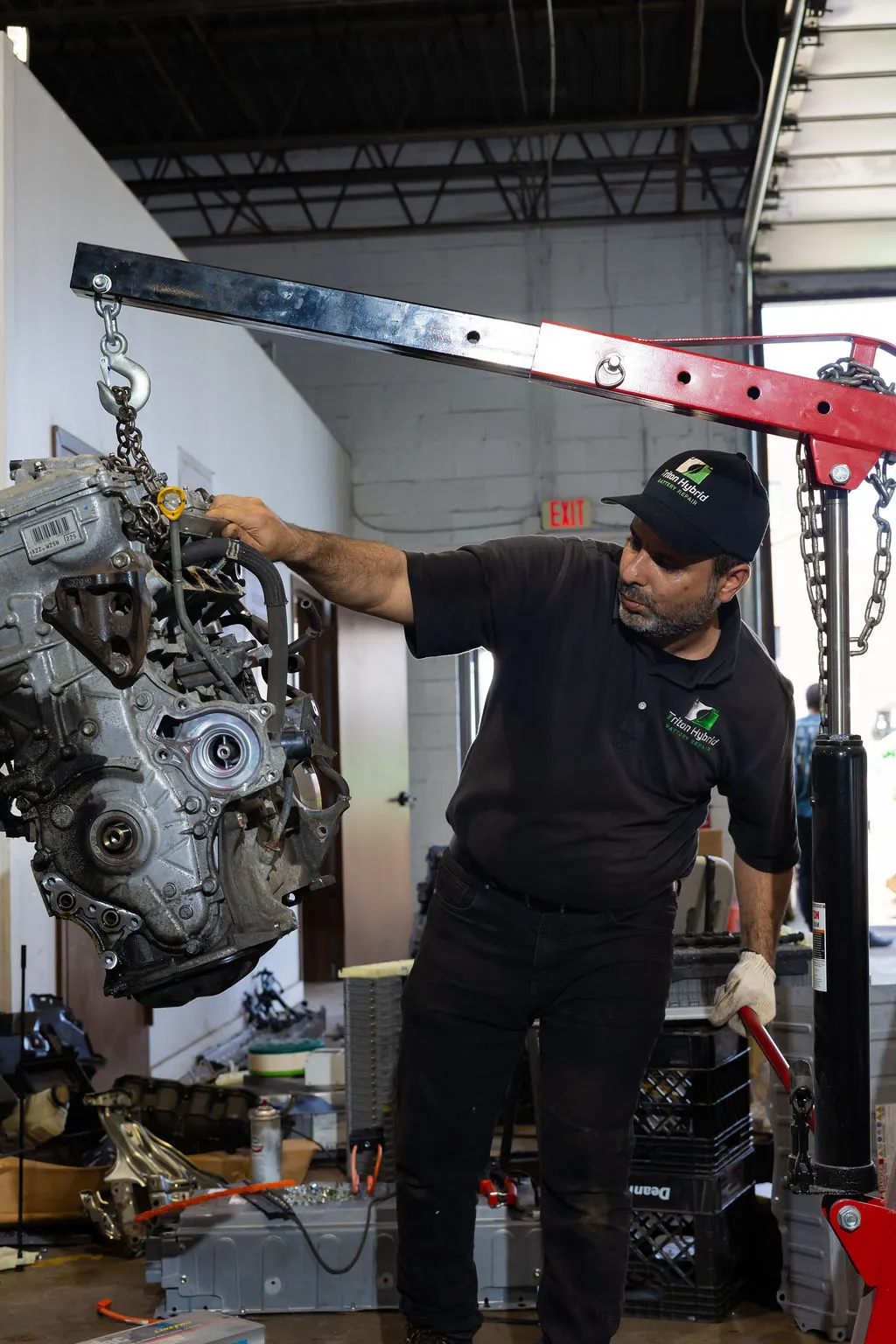
Existing Triton workshop photograph. It is not a fleet customer case study or a diagnosis of the warning discussed in this guide.
Should I stop driving or finish my route?
A delivery deadline is not a reason to override a dashboard warning. Identify the exact light and message, follow the owner’s manual for that vehicle, and stop safely when instructed. If the car is shaking badly, losing power or showing other serious symptoms, arrange help instead of trying to complete the route. An online article cannot clear a particular vehicle for continued driving.
For a specific example, the 2025 Ford Transit manual says a flashing check-engine lamp can indicate misfire and warns of possible catalytic-converter or other component damage. Ford calls for avoiding heavy acceleration and deceleration and obtaining immediate service. This is guidance for that Transit, not a rule for every gas car, hybrid or electric vehicle.
Once safely parked, contact your company’s designated person. Explain whether the light is steady or flashing and what the vehicle is doing. A steady light alone does not establish that it is safe to drive to Lorton. Agree on the next step before moving it; use suitable transport when it cannot be driven safely.
Technical reference: Ford: 2025 Transit owner’s manual, Starting and Stopping the Engine — Warning Lamps.
What information should I send my fleet manager?
Send observations rather than a guessed repair. “The engine light flashed and the van shook during acceleration” is more useful than “it needs an engine.” Take a dashboard photograph only while safely parked. Include the message exactly as displayed rather than grouping every warning under “engine trouble.”
Holman’s January 2026 fleet-maintenance guide encourages drivers to report check-engine lights and unusual noises promptly. For your own business, choose a reporting method drivers can actually use and tell them who monitors it. A message buried in an unattended inbox does not create an agreed service plan.
Use this short checklist for the first report. It is a suggested reporting format, not a claim about a completed Triton job:
- Vehicle: fleet unit or registration, year, make, model, mileage and gas/hybrid powertrain.
- Warning: exact text, steady or flashing light, and any accompanying temperature or other warning.
- Symptoms: shaking, noise, smell, power loss, stalling or no change noticed; when each began.
- Context: starting, idling or driving; recent refueling, maintenance or repairs; previous reports available.
- Handoff: where the vehicle is safely parked, driver contact and the person arranging the next step.
Technical reference: Holman: January 2026 fleet maintenance guide, page 1, prompt driver reporting.
Who should approve diagnosis and repairs?
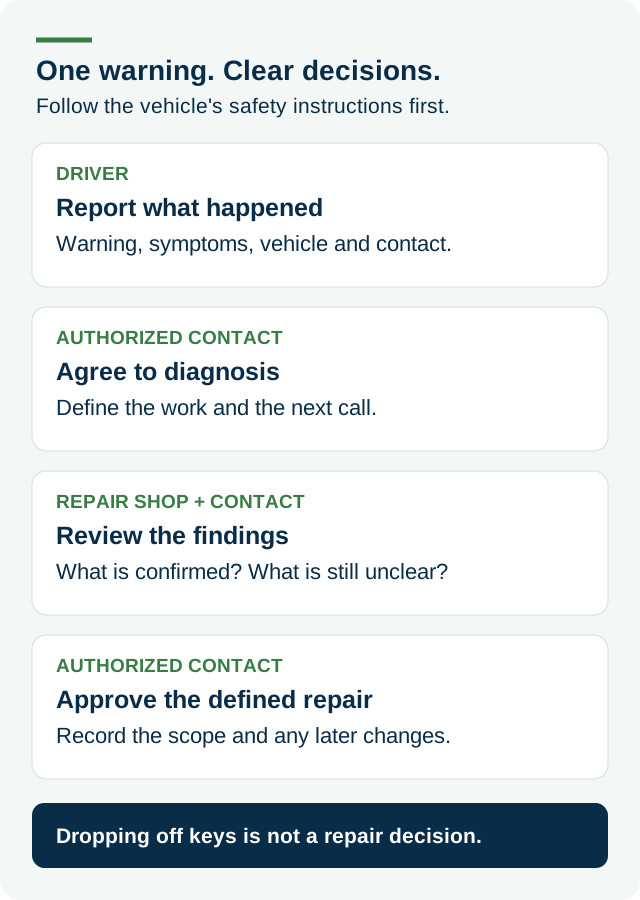
Use the person your company has authorized for that decision. That might be the owner, fleet manager or another named contact. Tell the shop who can approve diagnostic work, who must review a larger repair and whom to call if the primary contact is unavailable. A driver delivering the keys should not have to guess their spending authority.
Keep these roles clear: the driver describes the complaint; the technician investigates it; the authorized business contact decides on the proposed work. One person may fill more than one role in a small company, but the decision still needs to be explicit. Make sure the shop and driver have the same instructions.
If a leasing or fleet-management provider is involved, check its process before arranging work. As one program-specific example, GSA requires pre-approval through its Maintenance Control Center for maintenance repairs on GSA Fleet-leased vehicles. That rule does not apply automatically to a privately owned business car, and it does not establish that Triton participates in a particular fleet network.
Technical reference: GSA: pre-approval for GSA Fleet-leased vehicles, updated September 18, 2026.
Does approving diagnosis also authorize an engine repair?
Make that distinction explicit before work starts. Describe the complaint to be investigated and ask what the initial assessment includes. Identify the point at which the shop should call you again. A request to find the cause of a warning is different from choosing a replacement engine before the cause is known.
The FTC recommends getting a written estimate and arranging contact before work exceeds the agreed limit. At Triton, diagnosis is included with the repair; discuss any charge for standalone testing beforehand. Do not assume that deciding against a repair makes the investigation free.
If the next useful check requires additional time or taking components apart, ask what that stage can establish and what remains uncertain. Discuss what happens if you decline the subsequent repair, including the vehicle’s condition for collection. A staged conversation is especially useful when your business requires a second person to approve major work.
Technical reference: FTC: diagnostic charges, written estimates and additional authorization.
What should the manager ask when the shop calls?
Start with “What did you confirm?” Ask the technician to connect the reported warning to the findings and proposed repair. A warning light identifies a need for investigation, not an engine-rebuild decision. The cause may support a limited repair or require more extensive work; the recommendation should explain why.
Separate the original complaint from other items discovered during the visit. Which work addresses the engine warning? Which items are maintenance recommendations or separate concerns? Which findings remain unresolved? This keeps a discussion about one fault from becoming an unclear approval of everything mentioned on the phone.
When internal engine work is proposed, request the findings that justify it and the scope of the proposed work. Compare repair, rebuild or replacement only when those options are meaningful for the actual condition. The separate fleet repair-or-replacement guide covers the wider decision about keeping the vehicle; this handoff should first establish what you are being asked to approve.
How do we avoid confusion between drivers and shifts?
Keep one current record for the vehicle. Note the complaint, contact person, agreed work, unanswered questions and next update. If another manager takes over, share that record instead of forwarding only the latest message. Tell the shop when the authorized contact changes.
Before returning the car to assignments, ask what was completed, what checks were performed and whether any limitations or follow-up remain. Get the completed repair order and applicable written warranty. Do not assume battery coverage applies to engine work or that a supplier’s parts warranty covers every part of the job.
Tell the next driver what to report if the symptom returns. A repair record is useful when it includes the original complaint and the response, not just an invoice total. Keep recurring maintenance planning separate from closing out this particular fault.
Technical reference: FTC: completed repair orders and written warranty terms.
How do Arlington businesses arrange a visit?
Call (571) 325-1369 or send a quote request with the vehicle details, warning report and approval contact. Tell Sal whether you are arranging one repair or discussing ongoing fleet maintenance. All work takes place at 8419 Terminal Rd, Lorton, VA 22079; Triton does not provide mobile repairs or inspections.
Before sending a driver from Arlington, agree on drop-off and return transportation. If towing is needed, coordinate the arrival rather than assuming the shop has arranged it. Plan which assignments your business will cover while the car is unavailable. Timing depends on diagnosis, parts, the approved work and subsequent findings.
Available visits at least 24 hours away confirm automatically. Visits less than 24 hours away require Sal’s approval, so wait for confirmation. An arrival slot does not promise diagnosis or repair completion while the driver waits.
Triton services regular gas vehicles, all hybrid makes and models, and Tesla EVs, but no diesel vehicles. This guide addresses engine-light reports on gas and hybrid business vehicles; Tesla alerts need the relevant vehicle instructions. Confirm the exact vehicle and requested work when arranging a mixed-fleet visit.
Questions to bring to the shop
- Who is authorized to approve the initial assessment and any later repair?
- What findings support the proposed work, and what is still uncertain?
- When will you contact us again before proceeding?
- What should the next driver know when the vehicle is returned?
Get help with your vehicle in Northern Virginia
Fleet maintenance and repairs
Discuss one vehicle’s fault or ongoing maintenance at the Lorton shop.
Engine diagnostic service
Start with the warning, symptoms and vehicle-specific findings.
Engine rebuild or replacement?
Compare major repair options after the condition is established.
Service for Arlington businesses
Coordinate records, approvals and a shop visit.