
Fleet repairs · A Triton guide
Published
Repair or replace a fleet vehicle? Start with these questions
A major repair recommendation does not make the replacement decision by itself. First establish what failed, what the proposed work addresses, and what condition the rest of the vehicle is in. Then consider how the repair timeline and the vehicle’s future role fit your business.
Start with the safe next step, not the replacement decision
When a fleet vehicle develops a fault, first decide how it should be assessed safely. Record the exact warning, mileage, symptoms, and what the driver was doing when the problem occurred. Ask the shop whether the vehicle should be transported rather than driven. A vehicle being able to restart is not enough information to assign it another route.
For an engine-temperature warning, follow the vehicle’s emergency instructions. Ford’s published guidance, for example, directs the driver to stop safely and turn the engine off. Do not delay that immediate response while debating whether the company should keep the vehicle. The longer-term decision comes after the fault and condition are understood.
Appoint a contact who can share the history and approve the next diagnostic stage. Give the shop earlier invoices and any recent work related to the complaint. This is especially useful when several drivers have noticed the symptom but no one has collected their observations in one place.
Technical reference: Ford: responding to a coolant temperature warning.
Ask what is confirmed before comparing repair options
A useful diagnosis distinguishes the observed symptom from its confirmed cause. Ask which findings support the recommendation, what remains uncertain, and whether further inspection is necessary before the scope can be established. A warning code or a commonly failed part is not, on its own, an explanation of the complete job.
For an engine concern, a technician may need measurements as well as scan information. Bosch describes compression testing as a way to investigate cylinder-sealing problems involving parts such as rings, valves, and head gaskets. The appropriate tests and interpretation depend on the vehicle; a fleet manager should ask for the explanation rather than trying to diagnose from one number.
If a proposal requires disassembly before the final extent of damage can be known, agree on that stage and the next approval point. It is reasonable to separate investigation from a decision about a rebuild or replacement. Ask how you will be contacted when the findings change the available options.
Technical reference: Bosch: the purpose of engine compression testing.
Review the rest of the vehicle and its intended role
Ask for a discussion of other known repair needs, maintenance history, and the vehicle’s current condition. A major component can be repaired while separate concerns remain elsewhere. Make sure the decision is based on the whole vehicle, not an assumption that one completed job makes every system like new.
Describe the work the vehicle needs to do after repair: daily local visits, longer trips, deliveries, or carrying particular equipment. Explain whether the role is expected to change. A vehicle that no longer fits the business may call for a different decision from one that still suits its work and has an otherwise understood condition.
Avoid a universal mileage rule or an automatic replace-after-one-major-repair policy. Consider the actual evidence and your plans. Prior spending does not establish what the next repair will achieve, and a replacement vehicle has its own condition, compatibility, and availability questions to answer.
Compare complete proposals and written coverage
Ask what the repair includes: the proposed part or unit, related work, installation requirements, fluids where applicable, and the checks after completion. Find out whether the proposal addresses the original cause of failure as well as the damaged component. If another problem could change the work, have that assumption explained.
With a hybrid battery, establish whether the proposal is for a targeted repair, reconditioning of a used pack, or replacement, and which components remain used. With engine work, distinguish a repair of the existing unit from a used or remanufactured replacement. Similar labels on different proposals do not establish equivalent work.
Review the written warranty for the exact repair and intended business use. Triton’s battery-repair warranty is one year, and battery-replacement coverage is three years or 50,000 miles, subject to written terms. Those battery terms do not establish coverage for engine, A/C, general fleet, or other repairs. Ask which terms apply to the job under discussion.
Discuss downtime as a plan with dependencies
Ask what must happen before the vehicle can be returned: further testing, part identification, supplier availability, installation, and verification. Distinguish a preliminary timeline from a confirmed completion date. A part arriving does not necessarily mean the car is ready for its next shift.
Then map the business needs during that period. Which assignments can another suitable vehicle handle? What equipment or driver arrangements need to move with the work? Who will update the schedule if new findings change the plan? These are internal operating decisions to make alongside the shop’s repair discussion.
Do the same planning for a possible replacement. Availability, an inspection, preparing the vehicle for its role, and administrative requirements can affect when it becomes usable. Do not assume an advertised replacement can enter service immediately, or that a repair must be finished by a deadline the shop has not agreed to.
Inspect a used replacement before relying on it
If you consider buying another used vehicle, arrange an independent assessment and review its records before committing. Apply the same care you would use when evaluating the vehicle already in your fleet. Ask what the inspection can establish, what remains inaccessible, and whether follow-up testing is needed.
Match the prospective vehicle to the intended work, including its powertrain and manufacturer instructions. For an electric vehicle, consider where and when it would be charged as part of the operating plan. A replacement decision should account for how the team will actually use the car rather than just whether it appears available.
Keep the new vehicle’s baseline findings in its fleet record if you proceed. Record any maintenance to arrange, known limitations, and the documents supplied. That gives the next driver and manager a starting point instead of carrying assumptions from a sales listing into the maintenance schedule.
Bring a specific repair decision to the Lorton shop
Triton handles ongoing fleet maintenance and individual repairs for regular gas vehicles, all hybrid makes and models, and Tesla electric vehicles. We do not work on diesel vehicles. Bring the vehicle details, current complaint, prior findings, and any proposal you want to understand. Explain the vehicle’s role and your timing constraints.
Diagnosis is included with the repair. If you want assessment without proceeding to repair, ask about the diagnostic charge before authorizing testing. We do not publish repair prices or ranges: the vehicle, root cause, parts, labor, and further findings determine the proposal. Sal explains the work before you approve it.
You do not need to commit your whole fleet to ask about one vehicle. A single repair conversation can address the immediate problem, while an ongoing maintenance discussion can help organize future visits. A request through the website starts that conversation; it does not guarantee an appointment, priority turnaround, or a particular outcome.
Questions to bring to the shop
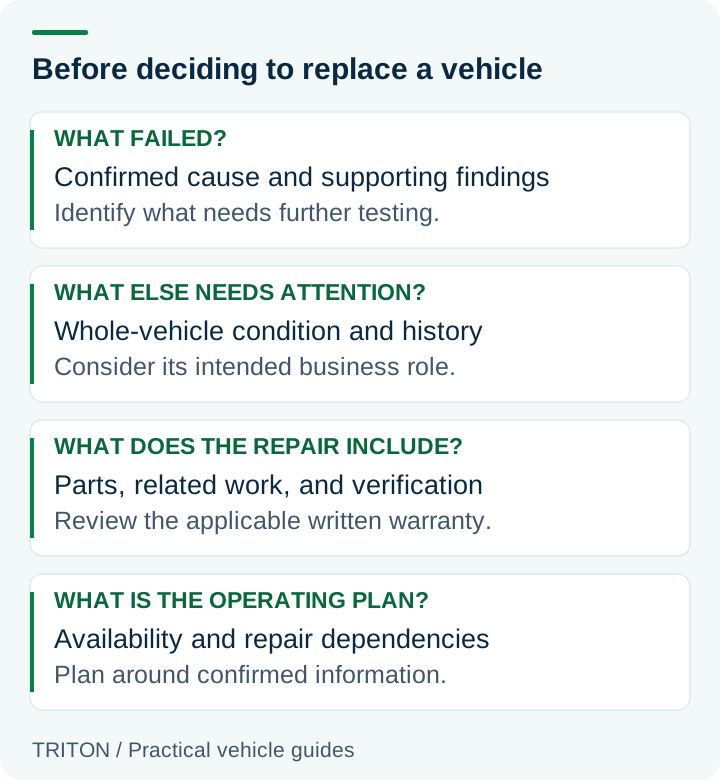
- What has failed, and which findings confirm it?
- What is known about the rest of the vehicle?
- What is included in the repair and its written coverage?
- What dependencies affect the completion timeline?
- Will the vehicle still fit the work we intend it to do?